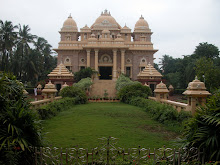
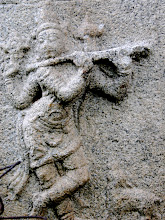
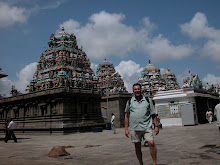
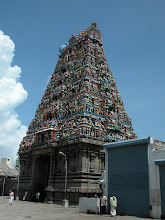
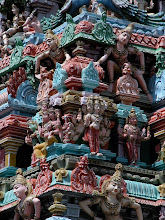
There are several temples within the Chennai city limits and many of them are quite old. I decided to visit one in Mylapore (which translates to "Peacock"). I took a tuk-tuk to the Kapaleeshwarar Temple and was immediately overwhelmed by the immense gate at the entrance. Standing some 60-70 feet high, it is adorned with over 2,800 individual figures, all of which are richly painted. The temple dates from 700AD and perhaps the oldest religious structure in Chennai. In ancient days, it would have been obvious for quite a distance and it is quite overwhelming up close.
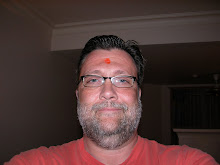
As I approached, I was being motioned at by several people to remove my shoes. You can either throw them in a pile and take your chances, or you can give them to a man who will keep them for you for 10 rupees (about 20 cents). When I entered, the temple stone floor was hot from the sun and it burned my feet. I moved in (kind of quickly) and a man rubbed white powder on my forehead. I learned the powder was ash. Each time you enter, you are reminded that we all come from ash and to ash we will return. Like in Lent. The temple is set out in a square which is the most holy and perfect shape in the Hindu cosmology. There are many small temples inside the big one. Not being a Hindu, I was not allowed into these, but could view them from the outside. Each of these small temples is dedicated to a particular god and there are several at temple sites. It has been estimated that there are over 330 MILLION different manifestations of gods in the Hindu pantheon of deities. All are a manifestation (male or female) of the big THREE Brahma (the creator), Vishnu (the sustainer) and Shiva (the destroyer). All three are part of the one central god Brahma who is really manifest in everything. Brahma is in meditation. Always. After creating the universe, he meditates.
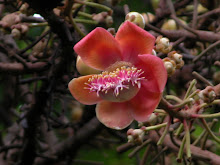
Those adhering to Hinduism can enter the smaller temple. These are covered and there is a central deity inside, and low fire, candles and incense. Inside is a sadu (priest) who takes offerings (Puja or poojah) of fruits and flowers (jasmine and lotus blossoms) from the faithful and places them before the altar. The sadu then invokes the god to answer the prayers of the faithful. Hinduism is open to anyone and does not preach or evangelize. It is ancient, older than the other world religions I am studying. I takes its teaching from the ancient (3,000BCE) Vedic hymns and texts written in Sanskrit. Much of the music surrounding worship here is centered on the chanting of these texts, although there are also spiritual songs that are sacred, but not from the Vedic texts. A different tonal system is also used in India and it is safe to say that music is not only central to Hinduism, it is life blood of the prayers.
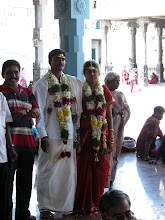
As I made my way around the grounds, I observed a large banquet hall. Inside were dozens of people who were eating off of banana leaves. They were being fed by the temple monks as they were poor and homeless. The temple was doing the work for the poor and needy and there are many such people here, especially in the lower castes. In another part of the temple, a young couple was getting married in an open air pavillion. We were invited to watch and even photograph them as they smiled, draped in Jasmine flowers. Meanwhile, other families were strolling the grounds, talking with friends or relatives, or playing with their children. While it was generally hushed within the grounds, the atmosphere was relaxed and casual except in the innermost temples. People were invited to make a donation if they wanted to as it takes a great deal of effort to maintain the temple. There are a total of over 10,000 painted figures in the temple and they are painted every 10 years by a crew of 300 people. It's a huge job.
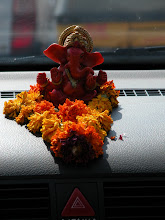
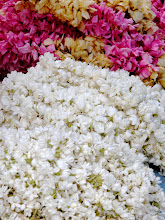
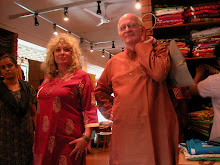
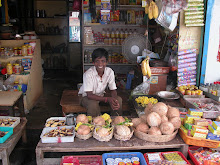
Outside the temple are vendors who specialize in various types of articles related to the temple. Some sell poojah (offering items) such as flowers, fruit (coconuts are a regular item because of the pure, white inside when you crack them open. Outside the temple people were throwing them on the ground all over to break them apart. Other vendors sell likenesses of the various gods, incense, bracelets, and any variety of things designed to make poojah. You can stroll the streets and make your choice. There are also several religious article "supermarkets" outside the temple. Here you can find anything you need for your home. One floor is devoted to incense and saree's. One floor is for religious statues and figurines. Another is for recordings and the top floor is for books. I roamed each floor, fascinated by the choices. I saw books about Christian cosmology, Islamic works and many Hindu books. I enjoyed browsing the children's section. My favorite title was "Vishnu to the rescue!"




















No comments:
Post a Comment